
Day Two

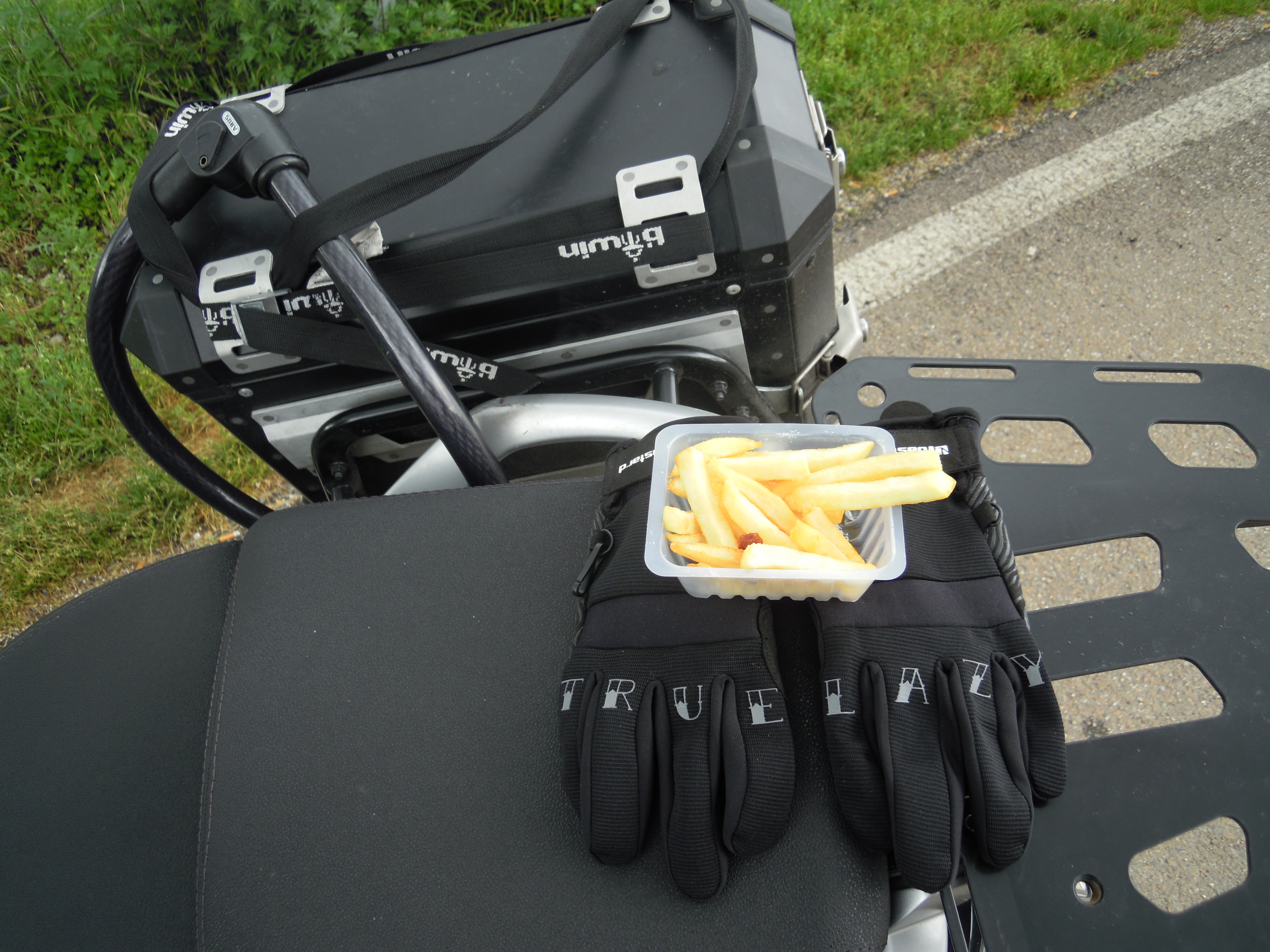
Here is my Rocinante with its own windmill, on the road to Amiens. As a modern, modest and weak copy of Don Quixote, my enemies are negligible.
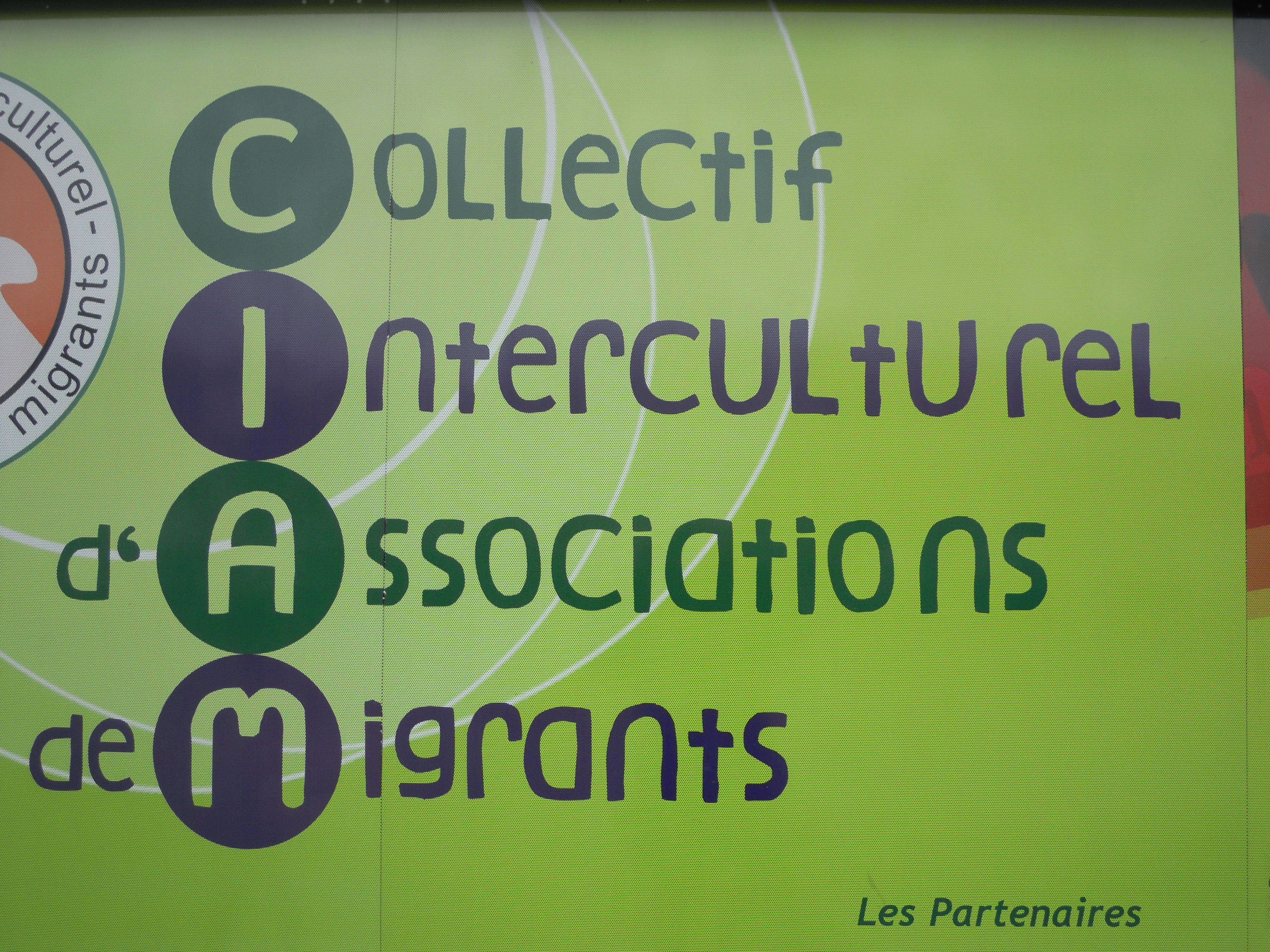
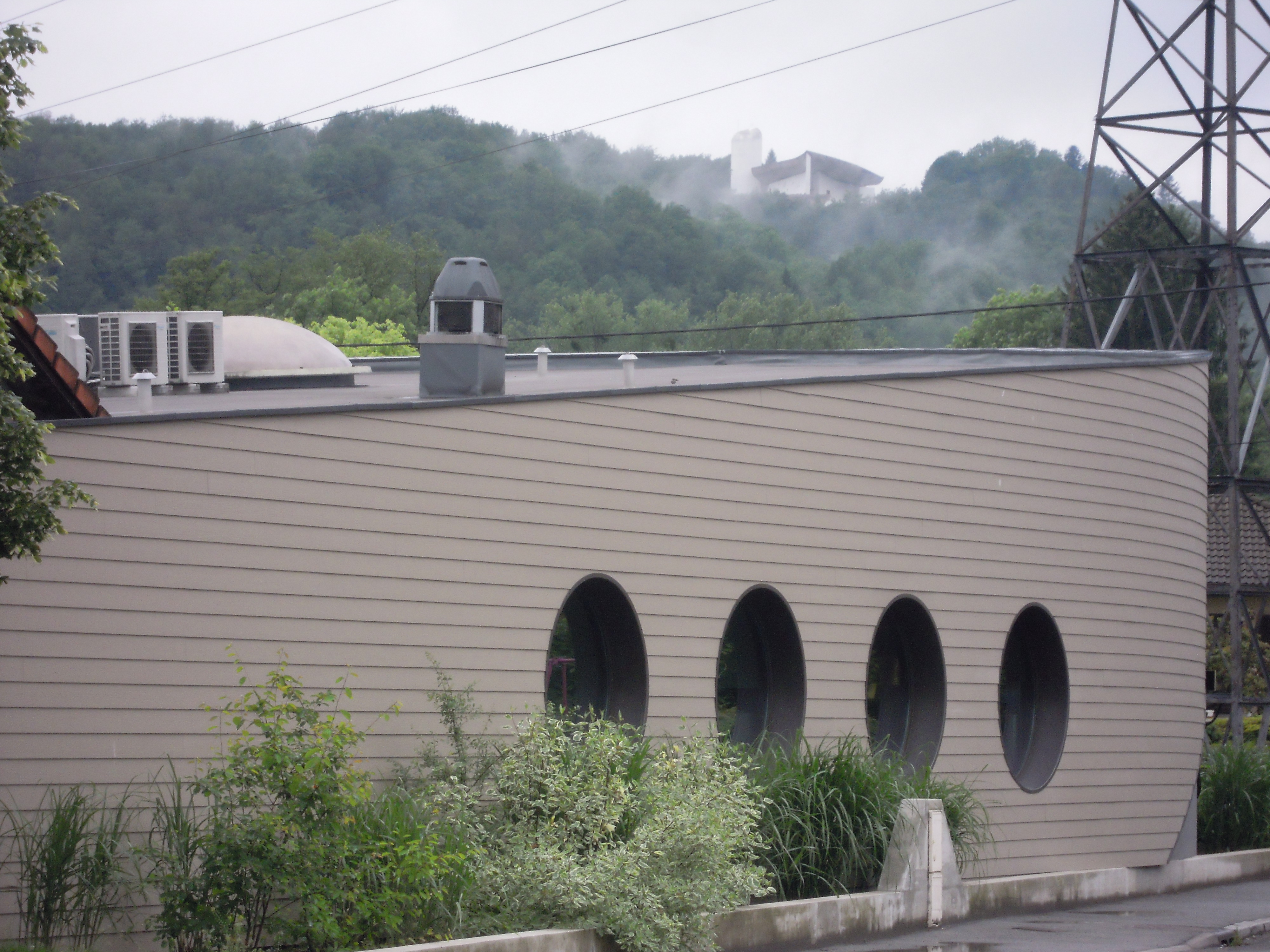
Funny, the contemporary version of CIAM – Congrès Internationaux d’Architecture Moderne (Le Corbusier’s utopia) is interestingly devoted to a different goal. Here is its office in Reims, right behind Rocinante’s irresistible profile.

A good reason to stop in Amiens is to compare the old and the new, the ancient and the modern, the concrete and the stone, Auguste Perret’s (Le Corbusier’s employer) Railway Station and Tower and the unknown freemasons’ Middle Age Cathedral. The final judgement is unknown – luckily the backlight helps Monsieur Perret…


I have to admit that my memory of Amines will not be linked to these popular trademarks. Walking back to my B&B, with Joe Strummer’s “Johnny Appleseed” in my Walkman, I saw the anonymous town, with its indifference and everyday beauty. A strong and unexpected vision – after all we spend most of our time outside the tourist guides and we should play more frequently with our business-as-usual perceptions.

Day One

Early start, the road is waiting. Between the beginning of this journey (Maggiora) and its first goal (Ronchamp) there are only petrol-driven stops. On the Swiss mountains, I go for the tunnel (it’s warmer and drier).

Once in France, it starts to rain, and it will never stop. That’s why the road sign appears even sweeter then expected:

Ronchmap is an icon for modern architecture scholars, students and fans. I’ve heard dozens os stories about the beauty of Le Corbusier’s church, about its unequaled atmosphere. But I’ve never seen it. Now Ronchamp is right in front of my bike.
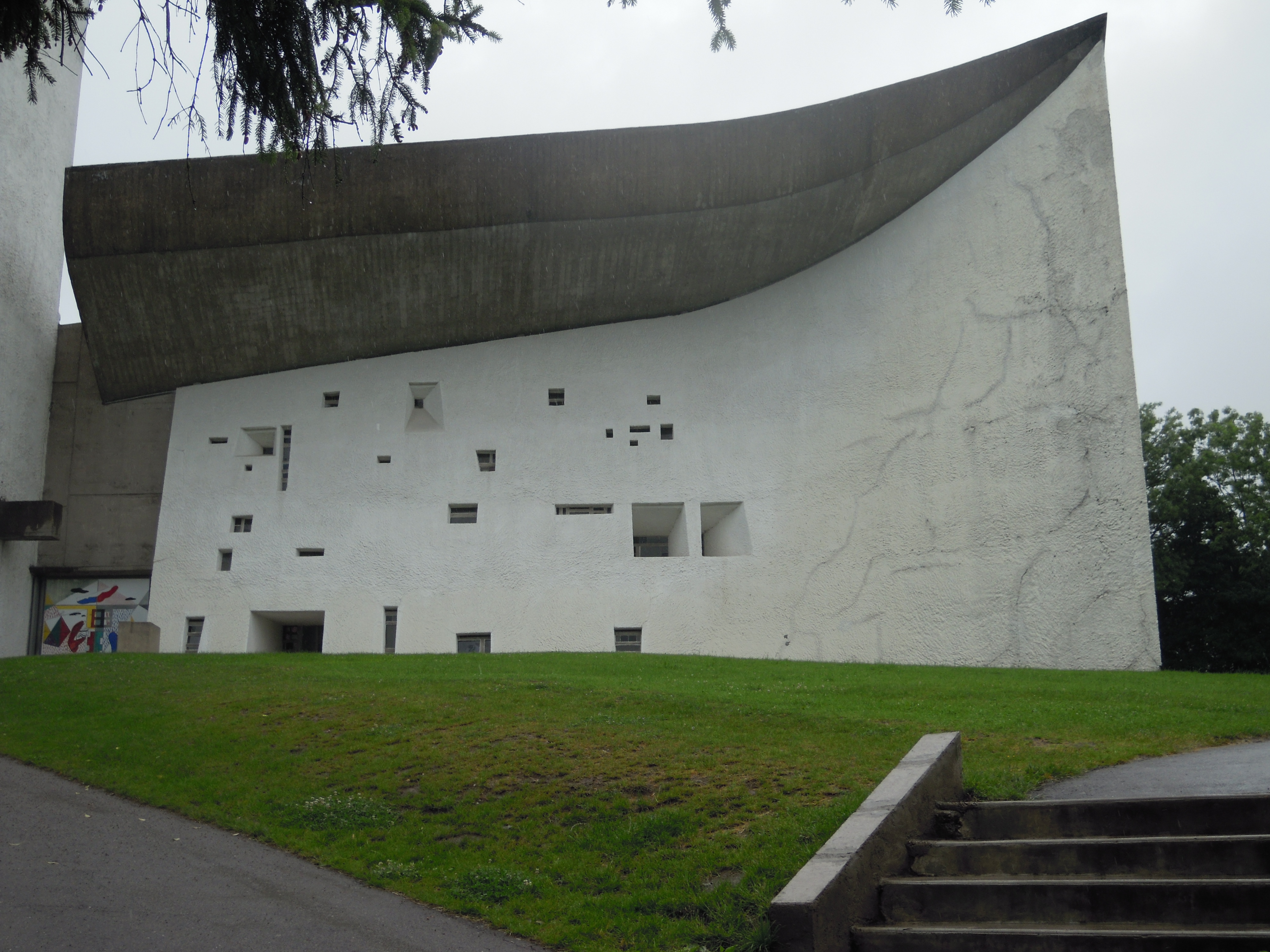
It is one of those places where you’d really deserve to be alone. After a 430 km through a 7 hours ride (yes, Im a true lazy rider) the prize should be the silence and the calm. But japanese toursits do not care about my merits, thus I’m not alone in front of the masterpiece. I wait outside for some minutes, enjoining Le Corbusier’s joyfulness.

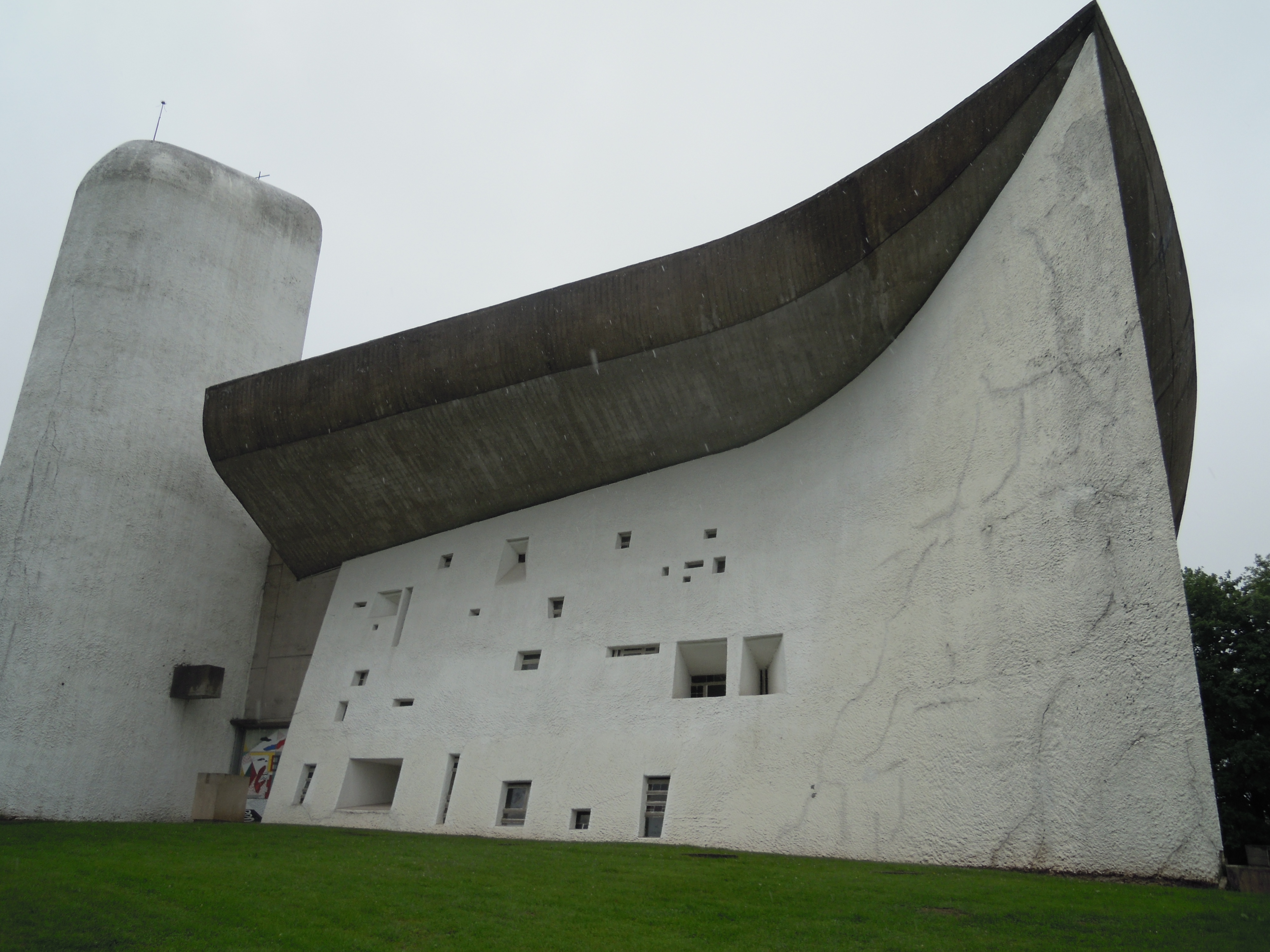
Once inside everything changes. Mystical is not an usual experience but it happens here. The semidarkness of this simple space and the absolute grace of every single detail brought me to stillness. Architecture masterpieces are almost impossible to describe; probably these two words, with all their capacity and ambiguity, can help to understand what is going on here: simpleness and grace. Now I can finally confirm that the inner space of Notre Dame du Haut is one of the few places in the world where modernism and humanism meet and integrate.
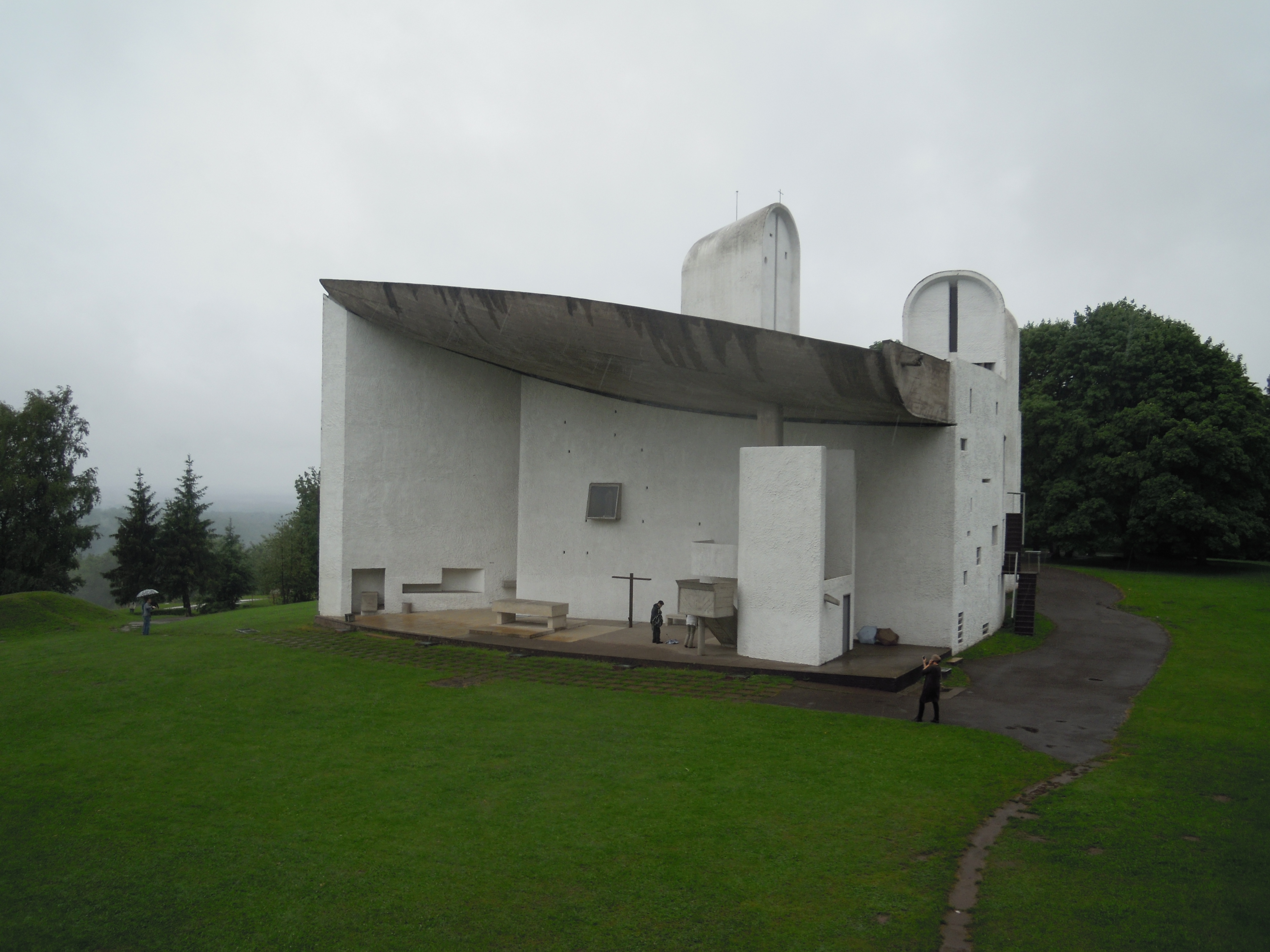
Unfortunately almost anywhere else, bad modernism keeps humans far off from grace and integrity.
Change management
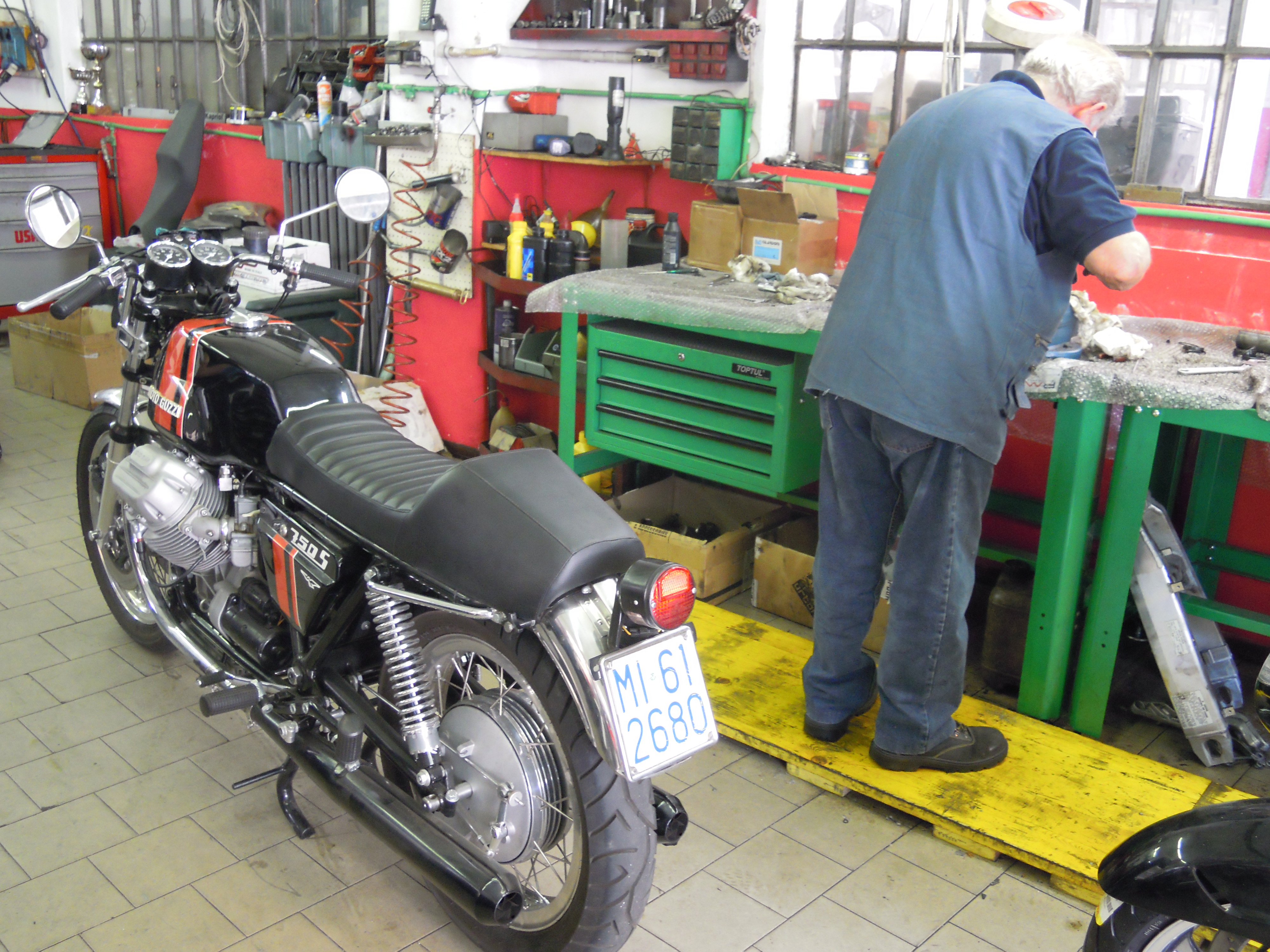
Change happens, often. As she came out of the garage, everything seemed perfect. Then a fuse pushed the change into the game. A single, small, stupid fuse.
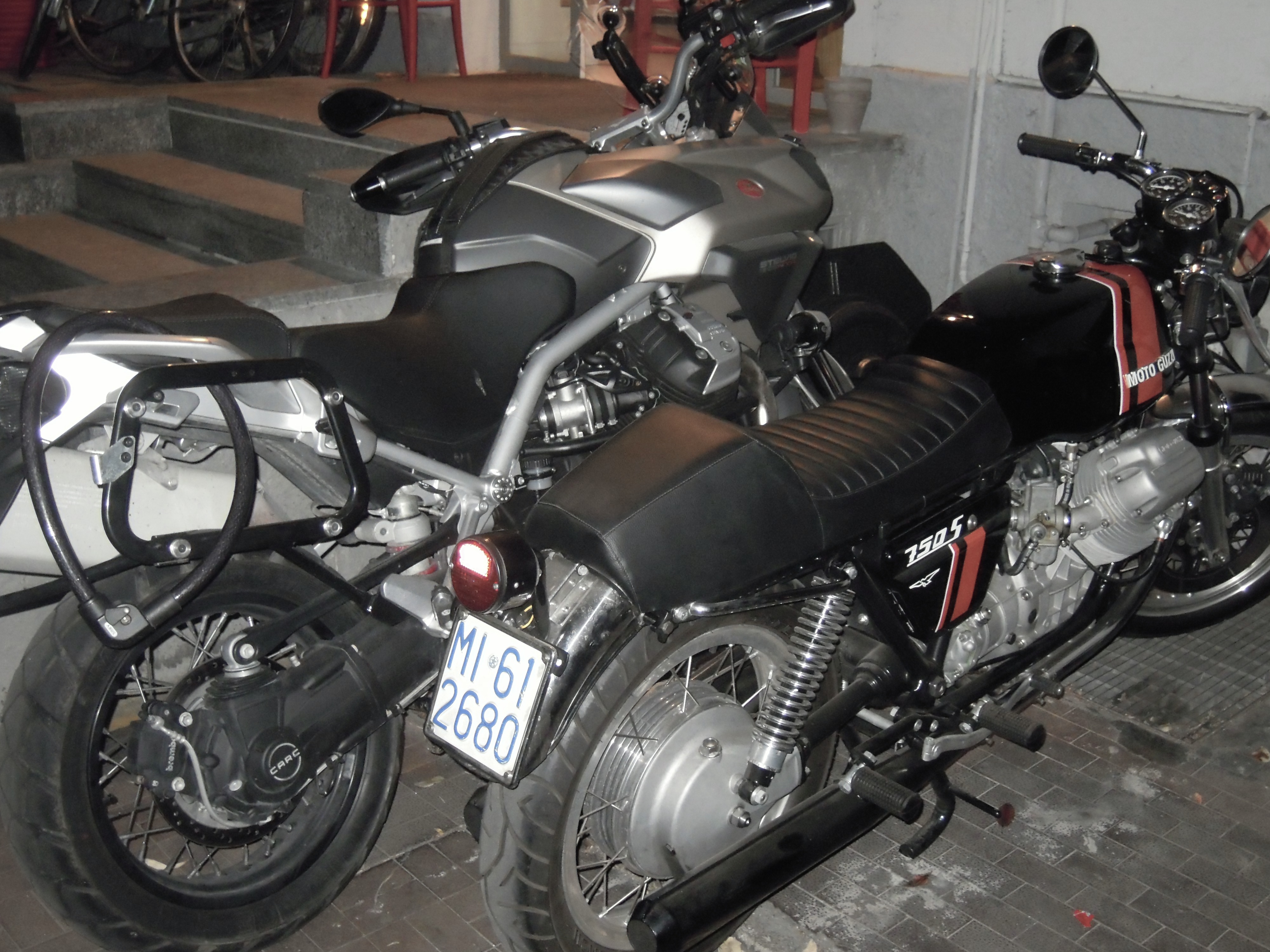
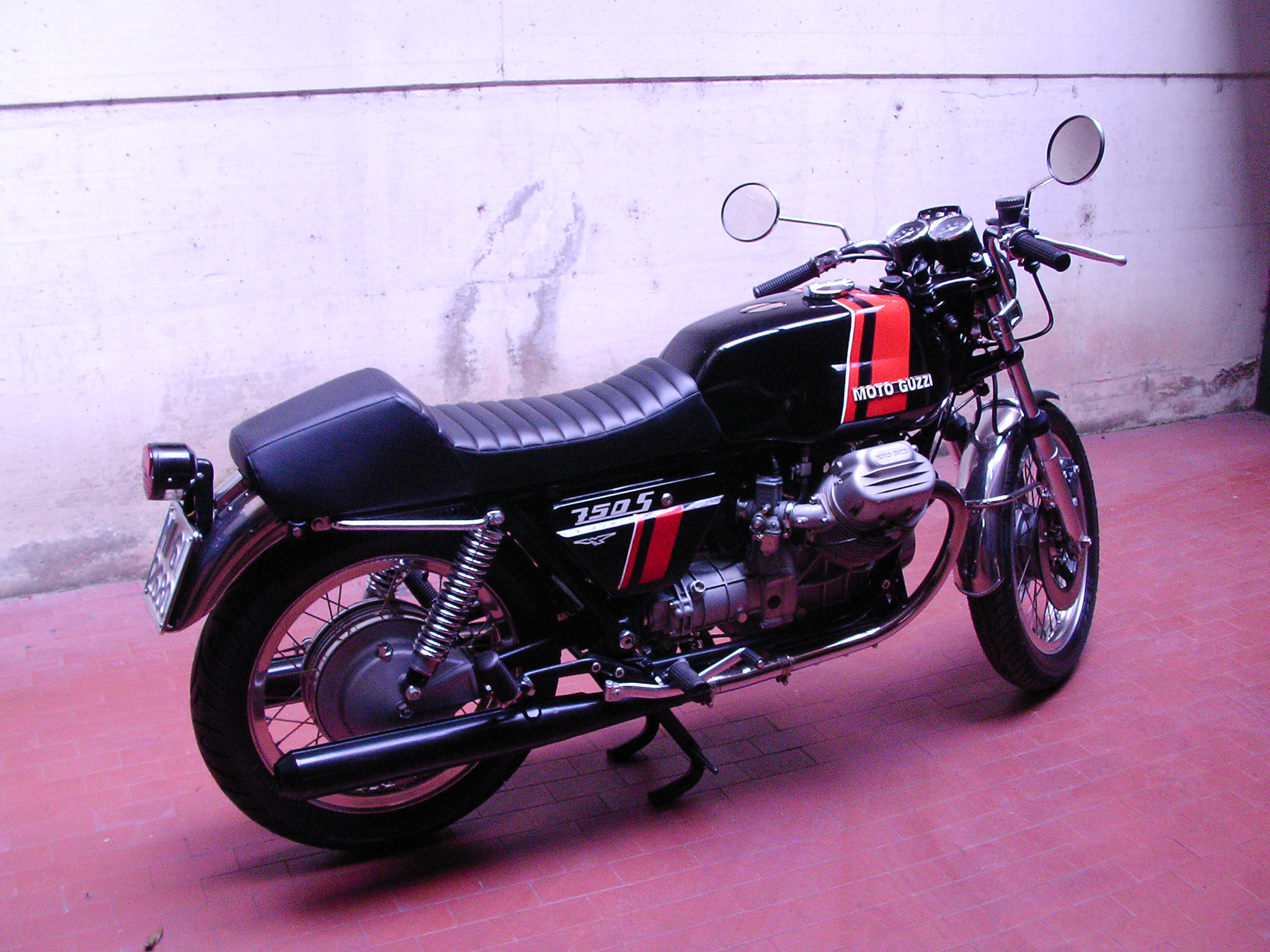
The bike suddenly stopped, Antonio Farinazzo joined me 12 minutes after my phone call, with all his incomparable bike wisdom. “Hmmmm, it must be a fuse”. Yes, it was an insignificant fuse, but it was also the even less significant couple of levers that keep the fuse in its place – well, should keep it… Antonio’s “instant and made to measure” solution was fair enough to bring me back home. But the “accrocchio” would not work for a long time: to bring back all 750 S’ reliability we need a brand new fuse box, and we we don’t have it, neither I have time to wait for it, the countdown is running and sunday morning I have to start the journey. The Stelvio is much newer (2011), much more comfortable, much more powerful (1200 cc), much more reliable, and it is still a Moto Guzzi. But this is going to be a night of regret.
Soundtrack

You can’t listen to any other music, when you ride a Mot Guzzi 750 S. The sound of your V Twin is all what you need. But when you’re dreaming of your ride to London, the strummer becomes something difficult to avoid.

Does Joe Strummer’s work and life belong somehow to Aesthetic Intelligence?
Obviously yes. As a matter of fact, his songs helped our culture to understand the value of differences, and to avoid the excesses of standards.
Enter “On the road”

It has been a while since my last serious ride. In the meanwhile I’ve been using my bikes for trivial reasons.
This Cowbird story tells something about my last trips:
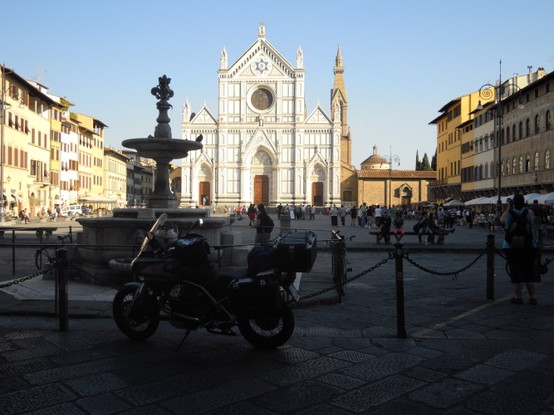
And this website (in Italian) witnesses how a trainer can use his bike to help Italian decision makers to understand how to use their Aesthetic Intelligence to make better decisione.

Now is different. Tomorrow evening I’ll be back on my 750 S, where is almost impossible to load any kind of baggage and is very easy to forget that I’m not 19 anymore. Another 48 hours to run my business as usual, then the rough sound of the sweet twin will overwhelm everything.
Funambulism
Philippe Petit is a master and Aesthetic Intelligence is his wisdom. His book On the high wire is a treaty of funambulism and funambulism is Aesthetic Intelligence disclosed. “You can find essential only in simplicity” says Petit – not a big deal: a great one.
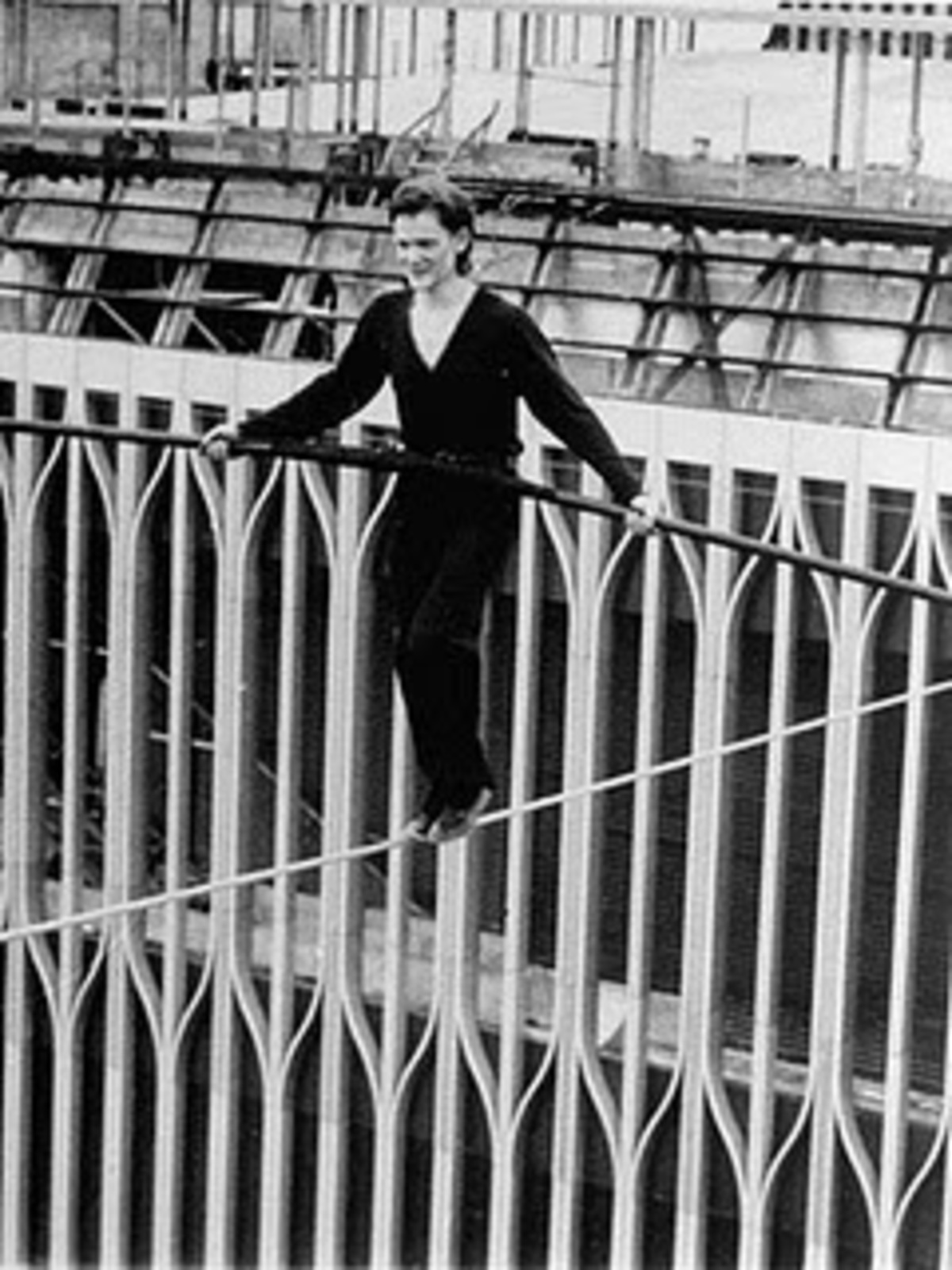
There is also an interesting relationship, at least in visual terms, between the tightrope walker ande the biker. They both play with equilibrium, love risks and hate standstills. They both have to move, always; even when they stop (the tightrope walker right in the middle of the rope; the biker, more modestly, in front of the traffic light) they have to work on their personal and imperceptibles movements. There isn’t a better way to learn how to instantly read the context and transform it in the invisible support of our negligible successes.
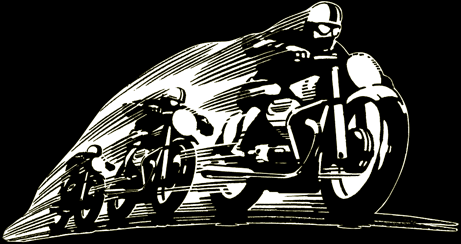
Aesthetic Intelligence in a single image
When we’re stuck to words, it is almost impossible to describe Aesthetic Intelligence in details.With images it’s much better.
In memory of Luciano Francesconi.

Aesthetic Intelligence
Aesthetic Intelligence is one of the many intelligences we own, the one that helps us to negotiate with reality via our senses.

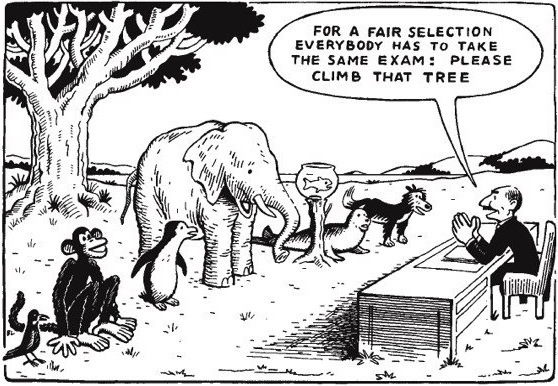
Since Howard Gardner researches, we know that our cognitive heritage is complex, rich, multiple. We use our senses to understand what happened and to preview what will happen in an aesthetic way, which isn’t necessaraly the clever or right or abstract way. But if we deliberately decide not to use such a peculiar understanding and previewing, we certainly behave the stupid way.
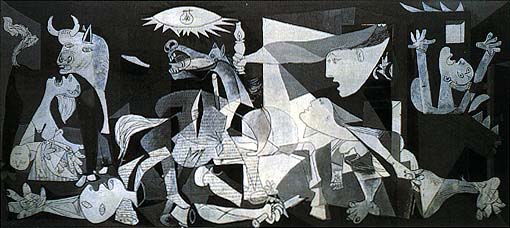
Making is connecting. Making business is building and feeding relationships. Aesthetic Intelligence is a business tool that enables our innate capability to explore not yet revealed links between wellknown phenomena, and to trasform these new links in relevant business opportunities. Aesthetic Intelligence works on details, traces, ineffable and powerful forces. But not all business is the same. Aesthetic Intelligence only works where standards are less iportant than creativity and exploration is more important than application. To fully exploit Aesthetic Intelligence one need to bisociate rather than associate. As Arthur Koestler teched us, bisociation is the priciple of creativity; as Carlo Ginzburg highlighted, to bring different things together is the secret weapon of Sherlock Holmes, Giovanni Morelli and Sigmund Freud.

Aesthetic Intelligence is good for business because it helps us to recognize new relationships and to leverege on them to multiply our choices.
Division of labor splits, Aesthetic Intelligence connects. Modern Organizations are based on the Scientific Management paradigm, which is itself based on the holy principle of the division of labor. Such an approach favors the development of vertical competences and isolated disciplines. This culture is still effective in many businesses, but it is completely useless when a company needs to get value from human distinctiveness. When market behaviours become unpredictibles, people, not machines, become the most relevant asset of a company. Where complexity reigns, transversality, not verticality, helps to achieve challenging results. Aesthetic Intelligence helps people to reshape their capabilities and fosters the ability to connect, negotiate, value differences, cross boundaries and build collective value upon multiplicity.
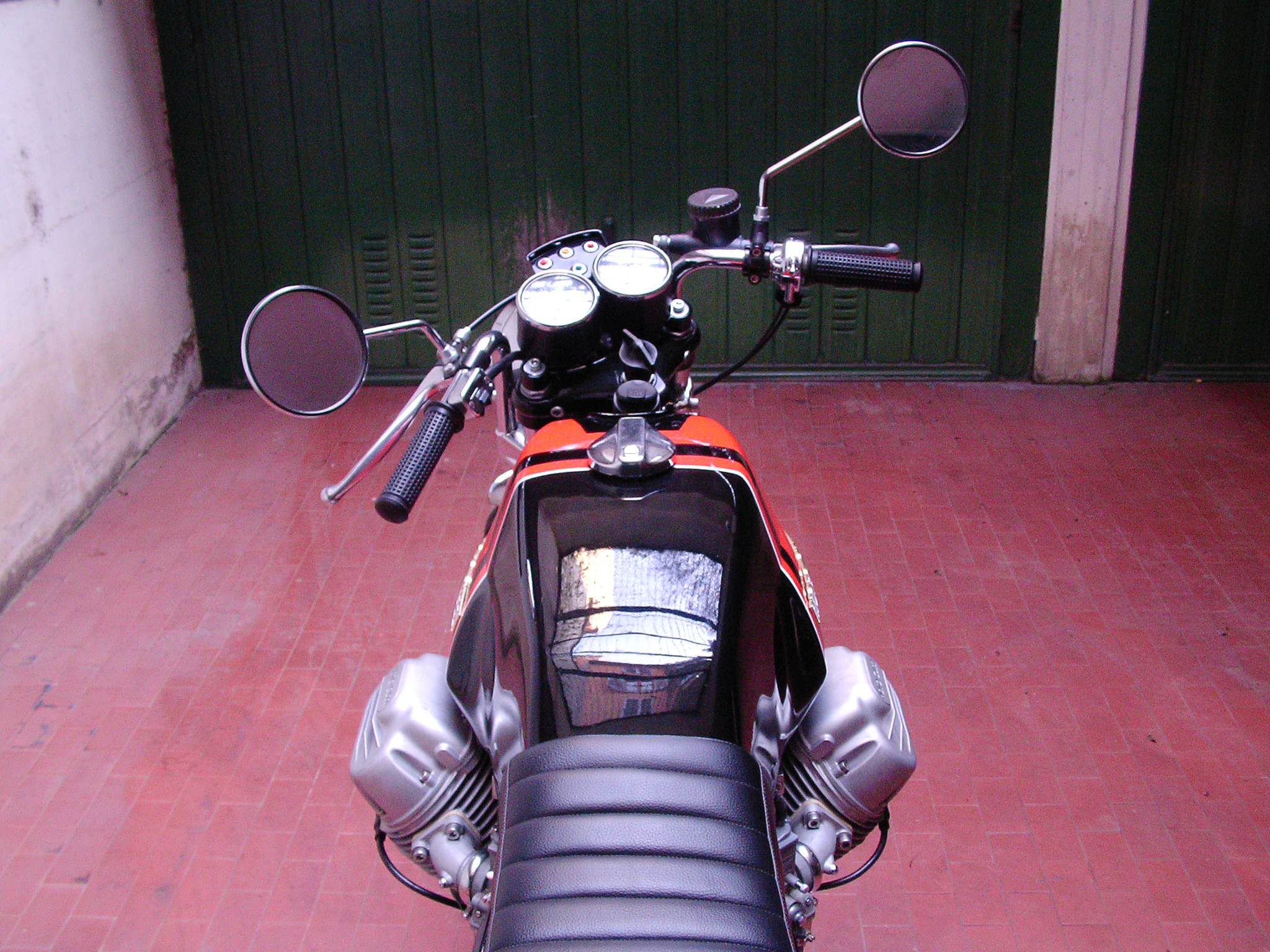
An Aesthetic Intelligence story
Many Aesthetic Intelligence experiences stand far away from art galleries or museums. Here is a simple one:
Why we need Aesthetic Intelligence
We are talking about Aesthetic Intelligence because the division of labor is the holy principle of our organizations, and the division of labor forces us to develop our Anaesthetic Intelligence, which is very bad for business. Television programs are a great example of Anaesthetical Intelligence. Like medical anesthesia, an excessive use can shatter the proper use of senses.

Sponsored by

Aesthetic Intelligents


 Aesthetic Intelligence